Published on
Life Skills: the Ultimate AI-Proof Asset in 2026

As the future of work evolves, the most important advantage may not be technical at all.
AI is changing how work gets done faster than most systems can keep up. While attention is focused on tools and technical skills, a different set of capabilities is quietly becoming the real differentiator for young people entering the workforce. These human skills—how people think, adapt, communicate, and lead—are increasingly shaping who succeeds in a rapidly shifting job market.
AI literacy for youth is necessary, but not sufficient
In 2026, AI literacy for youth is becoming a baseline expectation. Young people need to understand how to use AI tools, evaluate outputs critically, and engage with technology responsibly.
But AI literacy alone does not guarantee success. As automation expands across industries, employers are prioritizing skills that machines cannot replicate: communication, collaboration, ethical reasoning, problem-solving, and adaptability. This is where life skills training becomes essential.
The true “future-proof” advantage
Life skills for youth development are not new, but their value is growing as AI transforms the workplace. While technology continues to evolve, employers are increasingly looking for qualities that help people navigate change, collaborate effectively, and solve complex problems.
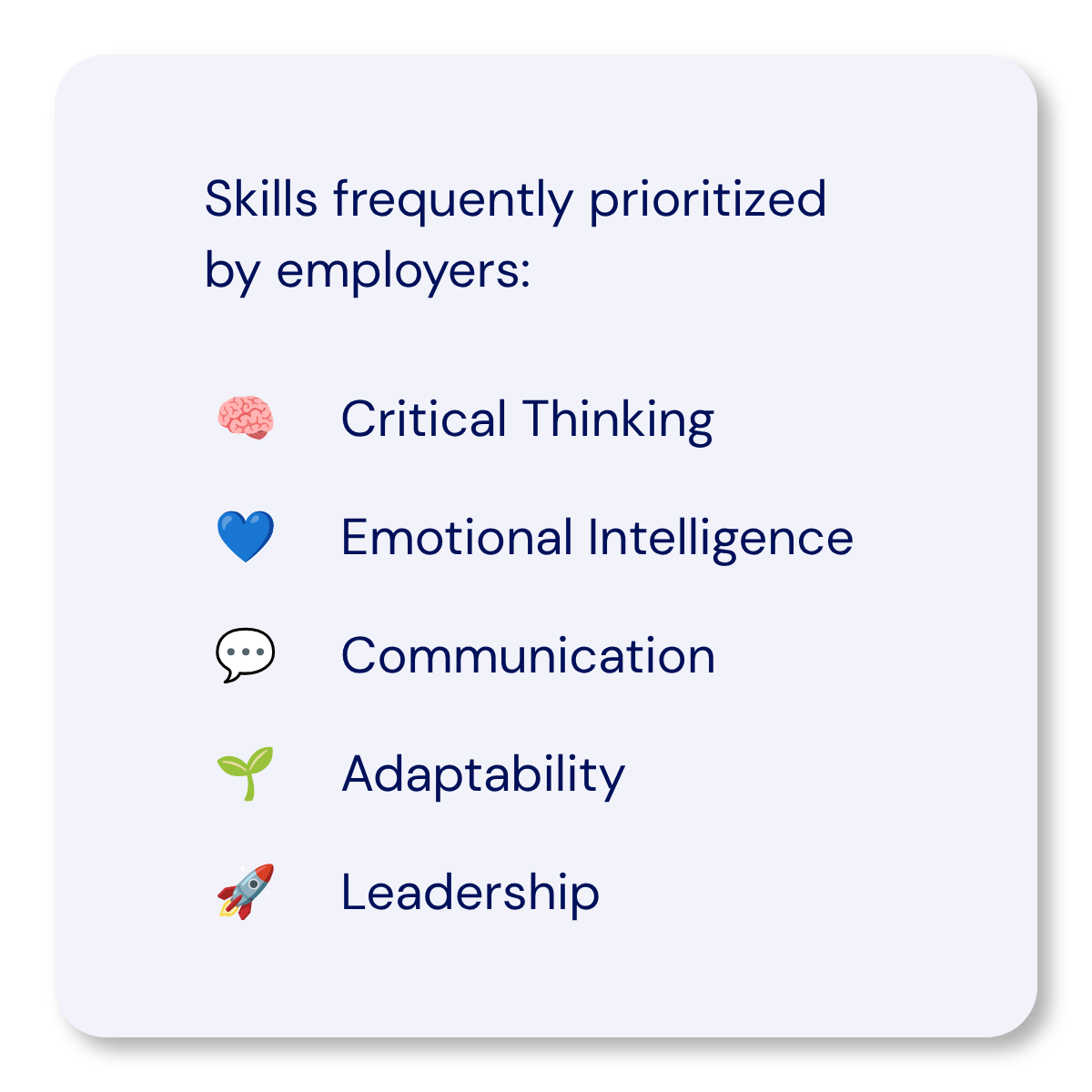
These competencies sit at the heart of effective youth leadership training and skill building for teens. They help young people succeed not only in their first job, but throughout careers that may span multiple industries, technologies, and roles.
Unlike technical skills that can quickly become outdated, life skills remain relevant regardless of how the workplace changes. They enable young people to learn new technologies, work alongside AI, and confidently navigate an increasingly complex world.
Turning life skills into workplace readiness
Knowing which skills matter is only part of the equation. Young people also need opportunities to develop and practice them.
That’s why IYF created Passport to Success® (PTS), a life skills curriculum that equips young people with the communication, teamwork, critical thinking, and leadership skills employers consistently value. Used by educators, employers, and nonprofit partners around the world, PTS helps bridge the gap between education and employment by preparing young people for the realities of today’s workplace—and tomorrow’s.
As AI continues to reshape jobs, programs like PTS demonstrate that investing in life skills is one of the most effective ways to build workforce readiness and expand economic opportunity for youth.
Future-proofing Gen-Z careers
Future-proofing Gen-Z careers requires more than technical upskilling. It requires experiential learning models for youth that help young people practice decision-making, teamwork, leadership, and resilience in real-world settings.
This is especially important for empowering underrepresented youth, who often face barriers to mentorship, professional networks, and early work experience. Youth workforce development programs that combine technical training with a strong life skills curriculum consistently produce stronger employment outcomes and long-term career growth.
Creating economic opportunity at scale
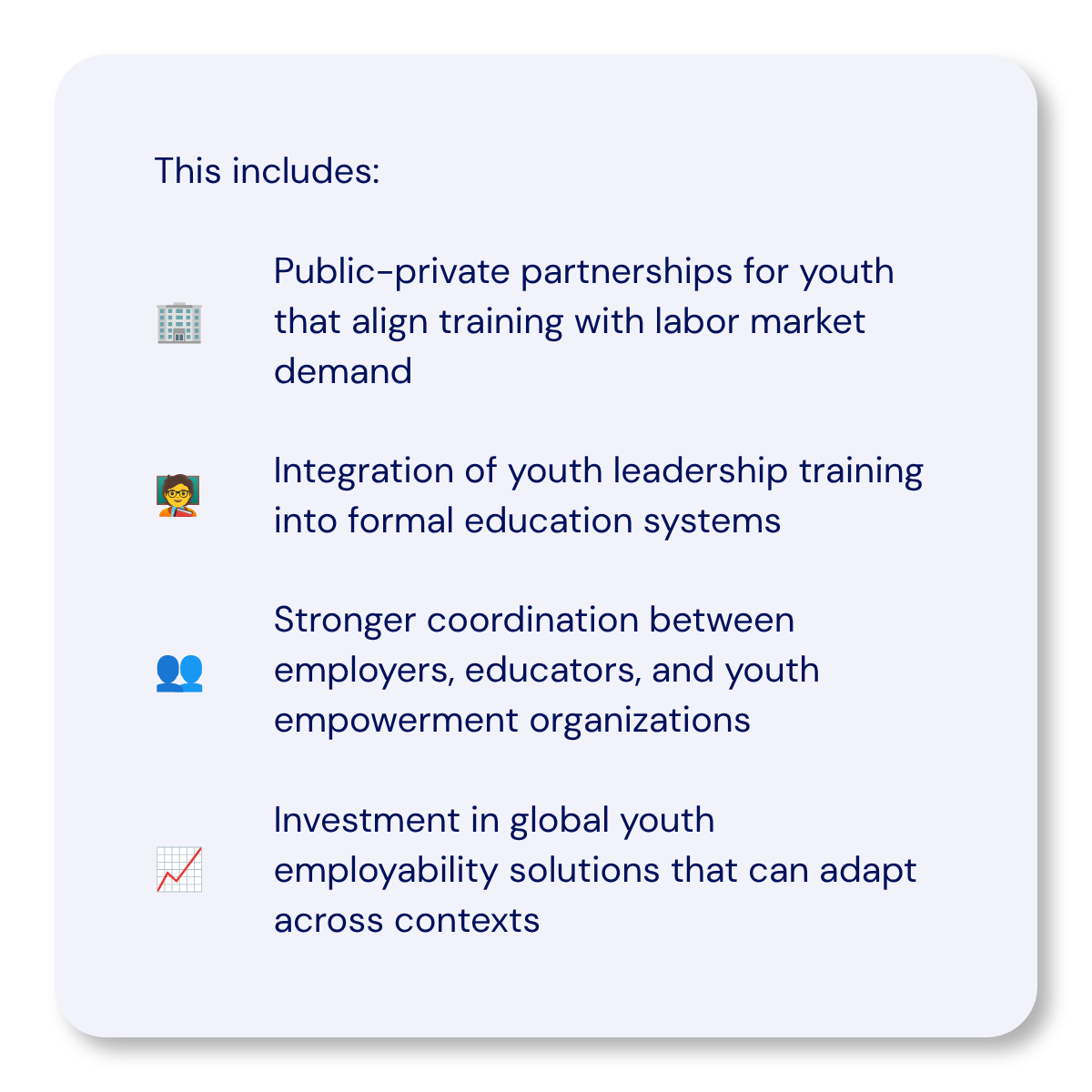
Preparing young people for the future of work requires more than individual programs—it requires systems change. As AI continues to reshape labor markets, governments, educators, employers, and youth-serving organizations all have a role to play.
Organizations like IYF help make these connections possible by bringing together partners across sectors to strengthen education-to-employment pathways. Through initiatives like PTS®, IYF equips young people with the life skills employers value while supporting scalable solutions that expand economic opportunity for youth around the world.
The bottom line
AI will continue to transform industries, but the most successful workers will not be those who compete with machines—they will be those who can work alongside them while bringing uniquely human strengths to the table.
Life skills are no longer a complement to technical training—they are the foundation of workforce readiness in the age of AI. By pairing AI literacy with proven approaches like PTS®, we can equip young people with the skills they need not just to adapt to the future of work, but to shape it.
Because in 2026 and beyond, the most AI-proof asset is still deeply human.