
Published on
Scaling Digital Skills for Workforce Development IYF & Cisco Networking Academy
At a Glance
By 2030, the global shortage of tech talent could result in 85 million unfilled jobs, costing businesses $8.5 trillion in lost revenue. Investing in workforce development is no longer just a social responsibility—it is a strategic necessity.
Cisco Networking Academy, seeking to close the IT skills gap, developed industry-leading training and certifications to equip young people with the highest demand digital skills. Mexico became a key focus for Cisco due to its growing role in the global tech landscape and trends like nearshoring and increasing investments in digital fields. However, Cisco faced challenges: outdated vocational curricula, limited career orientation, and a shortage of skilled educators.
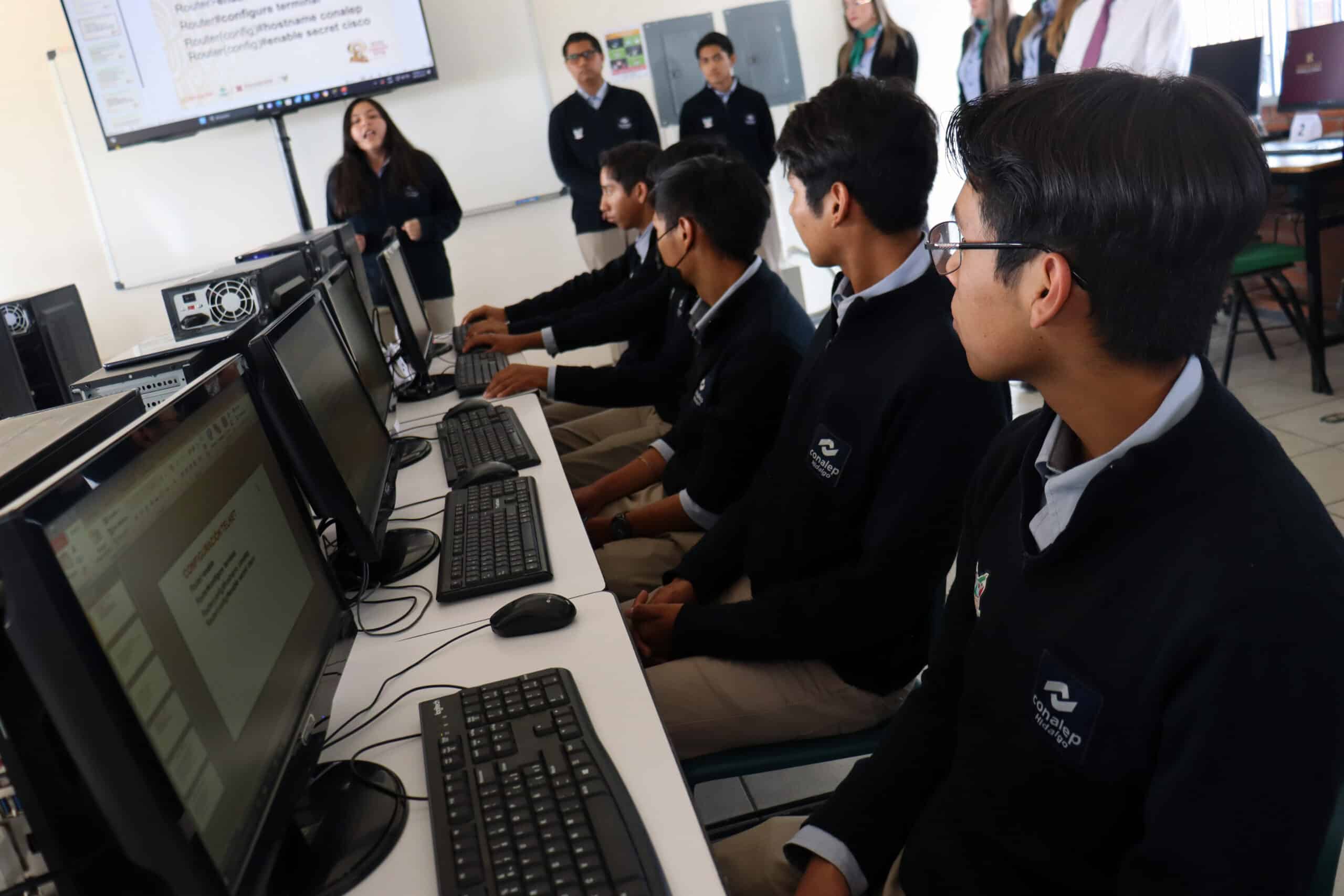
The International Youth Foundation (IYF), with its expertise in workforce development and a proven model that integrates the needs of students, schools, and industry, was the ideal partner to bridge these gaps. By integrating Cisco’s industry-standard training and certifications into two of Mexico’s largest education and training systems—CONALEP and COBACH—IYF has created a scalable model that benefits both young people and businesses seeking skilled professionals. This partnership not only addresses Mexico’s needs but also offers a blueprint for other regions and industries worldwide.
Delivering Workforce-Ready Talent
Since 2016, this long-term strategic alliance has led to real job placements, with graduates driving Mexico’s digital transformation. Training focuses on:
– Installing fiber optic networks to expand internet access.
– Expanding and optimizing digital infrastructure across industries.
– Improving routing efficiency and strengthening security measures.
– Securing digital infrastructure and driving innovation in cybersecurity.
Building a Scalable Workforce Development Model
While Cisco’s technologies enabled innovation across sectors—from IT and manufacturing to financial services—their full potential was hindered by a critical challenge: a lack of skilled professionals to manage and maintain networks.
To bridge this gap, Cisco developed globally recognized certifications, including CCNA, widely acknowledged as one of the most valuable IT credentials. In addition, Cisco built an ecosystem of education and training partners through the Cisco Networking Academy, connecting high schools, higher education institutions, and instructor trainers.
Despite these efforts, scaling the program sustainably remained a challenge. Cisco turned to IYF’s expertise in education systems to expand access and embed training into national curricula. IYF developed a framework that successfully integrated NetAcad training modules into standard school curricula, offered as part of the normal school day by existing instructors, aligning incentives to ensure long-term adoption. By working within existing educational systems, the program removed access barriers and empowered thousands of young people with industry-relevant digital skills.
By the Numbers
students trained across 93 campuses in Mexico
of job-seeking graduates secured jobs with earnings that drive economic stability
instructors empowered with industry-relevant training
award-winning impact, including the recent 2025 Premier+ Networking Academy Partner Award
Overcoming Implementation Challenges
Scaling the Cisco NetAcad program required tackling teacher resistance, administrative complexities, and inconsistent adoption. IYF identified and successfully addressed these barriers through:
-
Pilot Phases: Testing and refining the curriculum to fit institutional and students needs.
-
Teacher Support & Incentives: Weekly consultations, self-study training, and signed agreements secured commitment. Certifications increased participation.
-
Students Engagement: Mentorships and webinars to raise awareness about IT careers and challenge gender stereotypes.
-
Robust Communication & Monitoring: State-specific WhatsApp groups and a personalized monitoring system ensured consistent support and adaptation.
A Scalable Model for Global Impact
Real impact isn’t just about changing outcomes—it’s about transforming the systems that create them. In Mexico, the IYF-Cisco model proves that digital skills development can be integrated into national education systems to address youth unemployment and business workforce needs.
This model includes:
- True systems change. Two nationally approved curricula are integrated into the standard school day and continuously upgraded through the NetAcad platform.
- Sustainable faculty development. Instructor contracting, training, and pay structures now align with long-term quality instruction incentives.
- More opportunities for all. Upgrades to 93 public school campuses ensure students and educators have access to cutting-edge technology and learning platforms, bridging the digital divide and expanding educational equity. Now students and educators can learn and innovate from anywhere
By embedding these elements into education systems, this model drives long-term, systemic change and is replicable across industries and geographies.
“Our partnership with IYF has been key to achieving real educational transformation and scaling our impact sustainably in Mexico. Their ability to align incentives across teachers, students, and institutions has allowed us to better prepare young people for the digital opportunities of today and the future.”
—Rebeca De La Vega, Director of the Digital Impact Office for Latin America and the Caribbean
The Path Forward: Lessons for Workforce Development
The IYF-Cisco partnership demonstrates that closing the digital skills gap requires more than new technology – it requires systemic change. By transforming education, this model is preparing students for today’s jobs, strengthening countries’ economies, and building a future-ready workforce.